




16 January 2015
Partner post
New Rural Road Boosts Profits for Farmers
a0ef.jpg?itok=NTLJIjYH)
Farmer Najibullah is looking with satisfaction at the start of the dusty gravelled Imam Shashnoor road in Kabuli village that connects to the asphalted road to Herat City. “Thanks to the construction of this road, we are now making some 50 percent more profit as we now earn a minimum of AFN 500 (about $8.60) per day,” he says. Farmers, like Najibullah, have benefited the most from the construction of the 10-kilometer Imam Shashnoor road, which started in June 2013 and finished in February 2014. What was previously a two-hour journey by motor vehicle now takes only 20 minutes.
15 January 2015
Partner post
Food for Thought: Incorporating Nutrition

In October 2014, the World Bank hosted a knowledge-sharing and learning event that brought together South Asia’s Food and Nutrition & Security Initiative and Business, Enterprise, and Employment Support for Women in South Asia to discuss food and nutrition security (FNS) and to learn about some social enterprises run by women that are promoting FNS.
14 January 2015
Partner post
Develop capacities
a8de.png?itok=FbQgiY6W)
Disabilities are often consequences of poverty, and they deepen poverty. The sustainable development goals that will be defined by the United Nations should take the concerns of the people affected into account. The United Nations missed that chance when it set the agenda of the Millennium Development Goals 15 years ago.
13 January 2015
Partner post
Emerging powers: Rise of the South or a reconfiguration of elites?
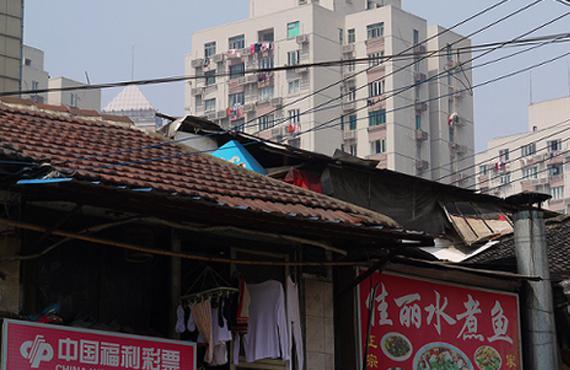
As emerging Southern powers such as Brazil, Russia, India, China and South Africa (the BRICS) rise up economically, and are joined by others like Turkey, Indonesia, Argentina, Mexico, South Korea, Egypt and Iran, how will existing geo-political and economic relations change?
12 January 2015
Partner post
The Challenge of Monitoring the Post-2015 Education Goals and Targets
The recognition of mutuality and interdependence drives much of the post-2015 development vision. Rather than an agenda dictated by rich countries to poor or conflict-affected countries, the post-2015 agenda is based on principles of universality. The goals, and the role that each nation plays in achieving them, are meant to be shared.

09 January 2015
Partner post
It's getting hot here: Southern advocacy to address climate change

The latest Intergovernmental Panel on Climate Change reports show that greenhouse gases are at the highest levels in history and that climate change is changing human and natural systems. 2014 was the hottest year on record and 2012 set a record for economic losses from disasters. While the science is clear, affecting people's attitudes to climate change is less clear-cut.
- ‹ previous page
- 28 of 70
- next page ›