



Today Daily Development talks to Aidan McQuade, Director of Anti-Slavery International. Founded in 1839, Anti-Slavery International is marking 175 years of campaigning against slavery in all its forms. But why is there still a need for an anti-slavery organization in the modern world and what is being done about it?
DD: Anti-Slavery International is 175 years old this year, but, according to the International Labour Organization, some 21 million people worldwide are in slavery. What does slavery look like today?
AM: Contemporary slavery is a diverse phenomenon. The most common form in the world is known as bonded labour, which enslaves millions of people across South Asia. Bonded labour is where workers are given a cash advance and then required to repay this at an extortionate interest rate with only their undervalued labour. In Europe, parts of South-East Asia and North America the trafficking of migrants for forced labour and sexual exploitation is the most common form of slavery. In Africa, descent-based slavery, where people are born into a slave caste, is very common, as is the trafficking of children for forced labour. Uzbekistan still practises state-sponsored forced labour with its cotton harvest. Many of the Gulf states have as part of their immigration law a system known as kafalah—literally meaning “sponsorship”—which means that to enter the countries the migrant must be sponsored by an employer. Once there the employer can change their employment conditions to akin to forced labour and the worker can neither change job nor leave the country. This system of kafalah provides a legal underpinning for private employers to practise forced labour with impunity in sectors as diverse as construction and domestic work. It is a shocking fact that the United Kingdom has essentially an identical system in place for migrant domestic workers.
DD: Considering the wide range of international laws against slavery, why does slavery persist, and what can be done to combat it?
AM: While there is considerable international law on forced labour and slavery, and further law on decent work, these laws are not everywhere included into national law, and in many places where law has been established nationally it is not well implemented for reasons of lack of capacity in law enforcement and the judiciary, corruption in law enforcement and the judiciary, or both.
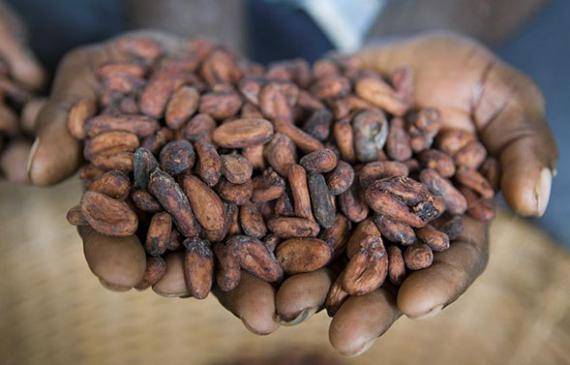
DD: The Anti-Slavery International Chocolate Campaign aims to end child slavery in the chocolate industry. Has there been progress in the elimination of child slavery in western Africa since the campaign was launched over a decade ago?
AM: There has been some progress. Certainly most of the chocolate retailers are engaged in the issue in some fashion and there is no denial that child labour and child slavery are features of cocoa production, as they are for the whole agricultural sector of western Africa. The cocoa processors, which are not consumer-facing, have been slower to act, as has the rest of the agricultural sector, and Côte d’Ivoire, where the issues were most grave, has only recently emerged from years of civil war. These factors mean that considerably more needs to be done, and the investments that have been made sustained.
DD: Finally, what can the international readers of Daily Development do to help the anti-slavery movement?
AM: The struggle against slavery should be part of the broader struggle against poverty: many people in slavery, or slavery-vulnerable communities, are currently excluded from development and anti-poverty programmes. However, their inclusion would lead to a positively disproportionate impact on poverty, as it would move 21 million people out of the forced labour for the enrichment of others to decent work for the benefit of their families.
Readers of Daily Development should ask the leadership of aid agencies what they are doing to help eliminate slavery in the world. They should write to Ban Ki-moon and ask him to ensure that slavery eradication is made a stand-alone post-2015 sustainable development goal. And if they are development professionals themselves, they should consider whether the programmes they are running are paying optimal attentional to the risks and realities of slavery and forced labour in the communities with which they are working.
Contributor

Aidan McQuade is the Director of Anti-Slavery International.
For more information on the work of Anti-Slavery International, see http://www.antislavery.org/english/.
Post a comment