



Throughout my career I’ve met hundreds of people whose lives have been an inspiration to me. They are people who refused to lose hope despite the challenges that stood in their way.
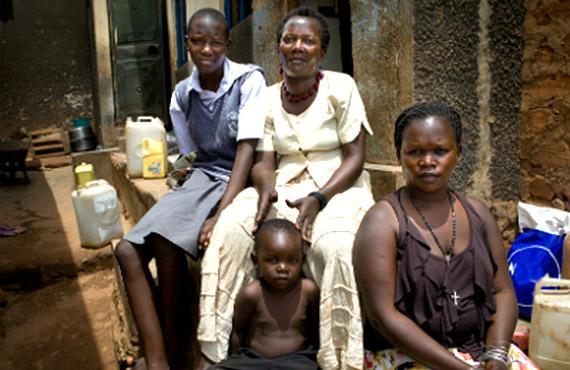
One such woman is Beatrice Anena, a 42 year old jewelry maker and mother of four who lives in Uganda. I met Beatrice on a trip to visit our programs in Uganda recently. As someone who has worked for decades on HIV/AIDS and now heading an organization focused on fighting poverty and helping communities build their capacity to lift themselves out of poverty, her story was particularly poignant for me.
Like so many children and women in war-torn countries, Beatrice was kidnapped by rebels in northern Uganda when she was only 14 and forced to become a soldier. Rescued by government forces a few months later, she eventually married and moved to eastern Uganda. Beatrice lived happily with her husband and four children, but when her husband died from AIDS and she tested positive for HIV, life became very difficult.
After her husband died, Beatrice moved with her children to a slum on the outskirts of Kampala where she began working at a nearby stone quarry. Her declining health made it very difficult to work and eventually her eldest daughter dropped out of school to help support the family.
Beatrice eventually received the medical treatment she needed and as her health improved, she began making jewelry from beads and paper for income. Her jewelry sold quickly, but she couldn't produce enough to support her family.
In 2010, CARE invited Beatrice and 20 of her neighbors to form a village savings and loan association (VSLA). VSLA members meet each week to learn business skills and deposit small amounts of money in the group's savings box. For Beatrice, she started saving $4 a week. Over time, her group had saved enough to start making loans to individual members. Some group members used their loans for household expenses like paying school tuition. Others funded their small businesses. The women repay their loans with interest, which is distributed among group members as dividends earned on their savings. VSLAs have a near 100 percent repayment rate.
Every VSLA begins with a year of intensive financial training. During training, Beatrice was presented with ideas many of us take for granted: budgeting, thriftiness, earned interest, profit-and-loss and investment.
Beatrice's group is called "Friends for Life." With support and encouragement she received she began investing in her jewelry business. She bought tools to produce her popular jewelry in larger quantities and hired neighbors to help her ramp up production. In just a short time, Beatrice was earning enough money to pay her household bills, school fees and health clinic visits. To guard against the ups and downs in the jewelry business, she bought a plot of land and built a house on it to rent and diversify her income. This entrepreneurial woman also built a public water tap and charges a few cents for people to use it. Less than two years ago, Beatrice described herself as hopeless. Today, she says, with her soft tone, that she's confident her children will attend college.
Beatrice, like millions of other women around the world, possessed everything she needed to be successful. What she lacked was the opportunity to put her determination to work. The VSLA program offered a path—a ladder to get her over the wall that was holding her back. VSLAs don't solve all problems, but they do provide a solid first rung for people who are ready to climb and bring their families and communities with them. Beatrice’s incredible determination is an inspiration and the main reason I do the work that I do. I was deeply moved by her resolve to overcome the barriers in her way and create a better future for herself and her family. She and women like her are my heroes.
Contributor

Post a comment