



The mission of the Global Poverty Project is to help end extreme poverty by 2030. Michael Sheldrick, its Senior Manager of Global Policy and Advocacy, explains how he got involved in the organization and why the cause means so much to him.
DD: Can you tell us about the Global Poverty Project, your role and how you got involved?
MS: We’re an international advocacy group working to catalyse the movement to end extreme poverty by 2030. My role is to coordinate campaigns—such as the End of Polio campaign—and to serve as the organization’s main representative to the United Nations. I also help provide the overall policy direction for our signature event, the Global Citizen Festival—a free music festival that attracts an attendance of 60 000 people.
I started working for the Global Poverty Project during my final two years at university in Perth, Australia. I had by that stage been volunteering for the organization for several years when the Director of our Australian office took me out for pizza one day and asked what I was going to do with my future. When I told him I would probably work as a lawyer, his response was “well you could do that, but I have a better idea. What do you know about polio?” He then offered me, and I accepted, a part-time role coordinating a campaign around polio eradication. It was only meant to be a three-month position, and yet three years later I’m still with the organization, only now based out of our New York office!
DD: Why is this cause important to you and what motivates you?
MS: I am personally very aware of the difference that access to education and health care can have on someone’s life. I faced several learning and speech difficulties while I was a primary school student, often scoring near the bottom of the class. Convinced I was “stupid,” I didn’t aspire to anything much. And then something completely unexpected happened. One of my teachers, Mr Byrne, told me I had somehow topped the class in a history test. That same teacher then laid down a challenge: that if I worked hard I could win the top student prize for the semester. I’ll never forget being presented with a certificate six months later bearing a big bold “1”, and eventually went on to finish high school topping all my subjects.
And yet, although I had worked hard to achieve these results, I never forgot the moment that Mr Byrne stepped into my life and changed it forever. Indeed, it is because I’m so grateful for having access to one of the best education systems in the world that I’m continuously motivated to campaign for everyone to have access to things like education and health care.
I’m also motivated by some of the most extraordinary individuals and activists who I’ve got to meet during my work, including some of the 20 million health workers and volunteers who have been involved in the global effort to end polio. I've also met countless activists and Rotarians in key donor countries such as Australia whose unrelenting stream of letters, phone calls, petitions, flash mobs and emails have helped to ensure that polio eradication remains a priority for our nation's leaders. Together, all of these activists and volunteers are the real heroes behind the movement to end extreme poverty, and it has been a privilege to play just a small part in their efforts. Their heroism and courage constantly inspires me as an advocate and campaigner.
DD: What is a typical day for you at work?
MS: I’m not sure such a thing as a typical day exists at the Global Poverty Project. It’s always so varied and diverse, and given we’re a small team most of us are constantly juggling several roles. On any particular day I could be drafting talking points for our chief executive ahead of an interview with someone like David Letterman, providing a security brief to members of the United States Secret Service the day before the Global Citizen Festival, drafting scripts for celebrity ambassadors, such as Gerard Butler, handing over our petitions to United Nations ambassadors and parliamentarians or lobbying Member States for meaningful commitments to be announced on-stage at the Global Citizen Festival.
DD: If you had one message to leave readers with, what would it be?
MS: A few months ago British filmmaker Richard Curtis came to our office to help us brainstorm new creative ideas around one of our campaigns. Overwhelmed by the uncertainty of our plans, our discussions quickly got bogged down by inertia. Intervening, Richard gave us some good advice—we may not know the overall plan, but what is the smallest step we can take right now in pursuit of our overall goal? He said that we should figure out what that step was—which could be as simple as sending postcards around our issue to ambassadors—and then take it. This will generate momentum and the rest will sort itself out. It’s like the old adage, “without uncertainty, possibility does not exist.”
Contributor
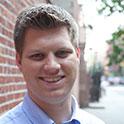
Michael Sheldrick is Senior Manager of Global Policy and Advocacy with the Global Poverty Project and serves as the organization’s main representative to the United Nations in New York.
Post a comment