



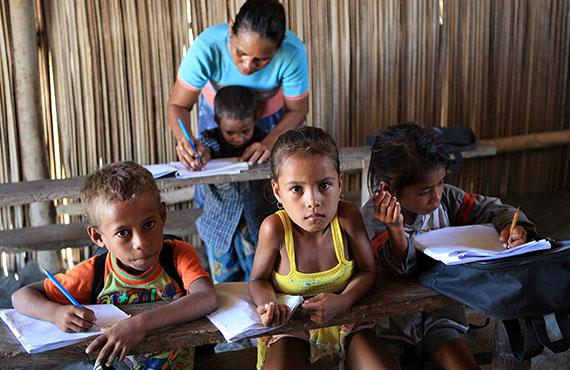
It’s commonly known in the health sector that pneumonia is the leading cause of death worldwide for children under the age of five. In 2011, pneumonia killed 1.2 million children—more than AIDS, malaria and tuberculosis combined. Despite the fact that pneumonia can be prevented with simple interventions such as antibiotics, vaccines, adequate nutrition and addressing environmental health risks such as air pollution, it’s still responsible for 18% of all deaths of children under five years old worldwide and takes the life of a child every 20 seconds.
The health sector has made great achievements over the past decade to reduce deaths caused by pneumonia by introducing new treatments and vaccinations. The first vaccine against pneumonia was made available in the United States of America in 2001, but only protected against a strain of the disease found in industrialized countries, and was ineffective against the strains of pneumonia that killed millions of children in developing countries. Thanks to the work of the GAVI Alliance, in cooperation with the pharmaceutical industry, today’s vaccinations can prevent more than 70% of childhood pneumonia in Africa.
Pneumonia affects children and families everywhere and is most prevalent in low-income countries in South Asia and sub-Saharan Africa, where access to primary education remains a challenge. For example, India, Nigeria and Pakistan have been consistently on the list of top five countries with the most child deaths as a result of pneumonia and the list of top five countries with the most out-of-school children. As we look towards the post-2015 development agenda, I can’t help but wonder how the world can possibly address these challenges without finding co-solutions.
UNESCO’s 2013/2014 Education for all global monitoring report contains new data highlighting education as one of the most powerful ways to improve children’s health. The report shows that one additional year of educating mothers would decrease child deaths from pneumonia by 14%, equivalent to 160 000 lives saved per year. Educated women are better informed on basic prevention techniques, such as breastfeeding babies for the first six months to prevent malnutrition, regular hand washing to protect children from pathogens causing diseases, and eliminating household air pollution such as smoke from unsafe cooking stoves. Educated mothers also recognize the signs of illness early on and are therefore able to seek treatment before it’s too late.
I’ve spent much of my career working on how we can bring innovation, capital and technology to emerging markets and to our developing country partners. I have worked in the health sector to find innovative ways to ensure that every child receives the adequate vaccinations needed in order that he or she can celebrate their fifth birthday. Now it’s time to carry this promise forward and ensure that these children and future generations have the chance for a productive life—and the best, most cost-effective way we can do this is through a quality education.
Contributor

Alice Albright is the Chief Executive Officer of the Global Partnership for Education, to which she brought over 27 years of international experience in the private, non-profit and public sectors. Ms Albright previously served as the Executive Vice-President and Chief Operating Officer of the Export-Import Bank of the United States and the Chief Financial and Investment Officer for the GAVI Alliance.
Follow Alice on Twitter @AliceAlbright.
Post a comment