



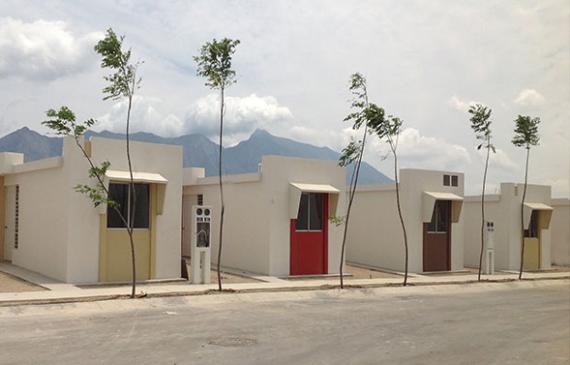
From lighting up slums in India with solar power, to building climate-smart housing in Mexico, to getting around Brazil by bus-based rapid transit, there is an enormous groundswell of action under way across the globe to address climate change.
At the United Nations Climate Change secretariat we are constantly promoting climate solutions through our Momentum for Change initiative. Launched in 2011, it aims to showcase concrete, results-driven action that helps take us closer to a low-emission, more resilient world.
For example, Pollinate Energy trains members of the local community to distribute and install solar lighting systems in India’s slum communities. This has two key benefits: it gives communities access to cheaper, renewable energy, providing alternatives to the expensive and toxic kerosene lamps that many of them use; and it gives community members the opportunity to earn extra income through a micro-entrepreneurship programme.
So far, more than 22 000 people living in 508 slum communities have been provided with solar systems. Transitioning from kerosene to solar has saved more than 189 000 litres of kerosene and 450 000 kilograms of carbon emissions to date.
In Mexico, expanding cities have brought about increased energy demand, infrastructure deficits and inefficient transport patterns. ECOCASA, a joint initiative between the Inter-American Development Bank, the German Development Bank and the Mexican Federal Mortgage Society, aims to reverse these trends. It is unlocking financing to build more than 27 000 low-carbon homes and finance 1700 green mortgages and in doing so is serving as a blueprint for other countries in the region and beyond.
Smarter public transport is another way for cities to minimize their carbon footprint. Buses of Brazil is using mobile broadband to improve the efficiency of its buses. This has attracted more people to switch from private vehicles to public transport in the city of Curitiba, reducing traffic congestion, fuel consumption and carbon emissions.
The Curitiba bus system is a model bus rapid transit system, and plays a large part in the city’s livability. The buses run frequently—some as often as every 90 seconds—and the stations are convenient, comfortable and attractive. As a result, Curitiba has one of the most heavily used, low-cost transit systems in the world.
Showcasing these activities provides a positive context for international climate negotiations, showing that action on climate change is not only possible but that it is already happening—in the hopes of inspiring others to do the same.
Contributor

Sarah Marchildon is a Communications Officer with the United Nations Climate Change Secretariat's Momentum for Change initiative.
Post a comment