



DD: What is the situation like in Freetown and in Sierra Leone more widely?
ET: The situation has become critical in Sierra Leone. Ebola has now spread nationwide, except for Koinadugu District in the northern part of the country, which has no confirmed cases of Ebola so far. Countries have closed their borders from us and some airlines have also ceased operations in Sierra Leone.
New cases of Ebola are being identified every day. The response has been slow and day by day cases are rising and people are dying. In just one week—from Tuesday, 26 August, to Tuesday, 2 September—the number of reported cases in Freetown doubled from 45 to 86.
I’d like to go to report directly from the epicentres of the virus, but I don’t feel I can because there’s a serious shortage of protective clothing and I would put myself at risk of contracting the virus.
DD: How are people reacting to the outbreak?
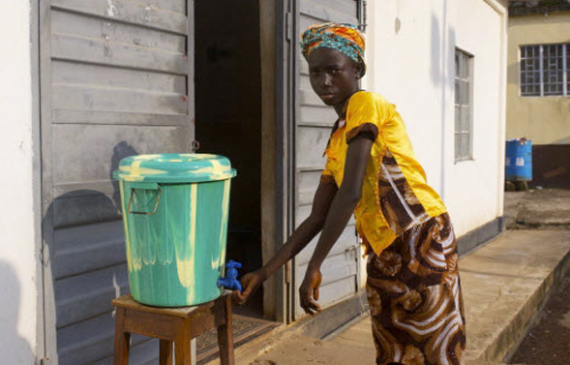
ET: No one feels safe. There’s a realization that Ebola’s deadly and that people have to take precautions to stay alive. People have accepted the gravity of the situation and are taking serious preventative measures. They’ve stopped eating bush meat, are avoiding physical contact and are going to the nearest health facilities and hospitals whenever they feel sick or if they start to experience symptoms.
DD: How are the health workers coping?
ET: It’s particularly bad for the health workers and many have contracted the virus and died. Just last Sunday one of the nurses working at the Connaught Hospital in Freetown died of Ebola. The authorities didn’t handle the situation well. There was no formal announcement of her death, no obituary, nothing.
That upset a lot of nurses working in the hospital and on Monday they took strike action. They were protesting not only about how the situation was handled but about their lack of support in the face of such a massive crisis. Staff just aren’t well trained to deal with Ebola—they don’t have enough protective equipment, there aren’t enough medicines and the risk allowances for medical staff who are putting their lives in danger every day are not forthcoming.
The day of the strike the Deputy Minister was quick to announce an incentive package of SLL 500 000 (just over US$ 100) for treatment centre staff and burial teams, SLL 400 000 (just under US$ 100) for lab technicians and SLL 200 000 (US$50) for isolation centre staff.
The nurses agreed to the package and returned to work. But we need more than incentives—I’ve promised the nurses I’ll go back and speak to them to find out whether the situation has improved.
DD: What other challenges are being faced in Sierra Leone?
ET: The burial practices for people who have died from Ebola are a great cause for concern. People feel that that the way in which people are being buried is not being done in an appropriate manner. They don’t think it’s being done properly and are worried that communities will be stigmatized.
When I spoke to people at the Kingtom Cemetery they said that even after the crisis is over they will be too afraid to go to the cemeteries where the victims are buried for fear of becoming infected.
The Kingtom community has been particularly affected by Ebola and residents are still raising concerns about the way in which the burials are being done. They’re calling on stakeholders to oversee the burial process to make sure it’s being done properly.
When I reported from there I spoke to a carpenter who lives next to the Ebola burial site. He said that graves were only being dug two to three feet deep and that sometimes two bodies would be buried in the same grave. The cemetery clerk denied this but the reports are certainly concerning.
I also spoke to grave diggers in the area who talked to me anonymously. They said that more than 20 Ebola bodies had been buried in different locations around Kingtom Cemetery. They said some were buried behind a factory; others near Kingtom guest houses and even one by a children’s day-care centre—all located along Bolling Street were the cemetery is.
The authorities have said they’ll put a fence around the victims who have already been buried and will try to find a secluded place away from Kingtom to bury any future bodies.
DD: What do you think needs to be done to bring the situation under control?
ET: The situation here is critical. More and more people are becoming infected and dying every day. It’s become much more than just a health crisis. It’s affecting every part of society. People are finding it difficult to work because Ebola is all they can think about at the moment.
The closure of borders and flight cancellations have sent an extremely negative signal to the outside world. It’s scaring away investors and tourists and its having a severe impact on our economy.
It’s clear that we can’t cope on our own and we desperately need the international community to come on board and help us. We need personal protective equipment, medical experts to come and train our doctors and nurses, we need supplies and we need people who can help advise us about how to stop the situation spiralling out of control.
We’re doing our bit but we’re new to this kind of outbreak. We don’t know enough about prevention; it’s only when it escalated that we started to look at the preventative measures we need to take.
We just don’t know much, so we need every international partner and organization to come on board and assist Sierra Leone, Guinea, Liberia and now Nigeria.
We’re all brothers and we need your help now.
Contributor
Edward Tommy is a reporter for the Awareness Times Newspaper in Freetown, Sierra Leone. He has been working as a journalist for a number of years covering a broad range of topics, including development, politics, health and economics.
He has been reporting on the Ebola outbreak since the virus spread to Sierra Leone in May 2014.
Post a comment