If you had an initial $10 billion in capital to fight climate change and boost resilience, how would you decide how to spend it? This is one of the key questions facing the Green Climate Fund Board at its ninth meeting in Songdo, South Korea this week.
Momentum for Change is an initiative spearheaded by the UN Climate Change secretariat to shine a light on the enormous groundswell of activities underway across the globe that are moving the world toward a highly resilient, low-carbon future.
The Millennium Development Goals (MDGs) have become a key metric for measuring the performance of developing countries in addressing critical development challenges. The goals are expressed in concrete, time-bound targets set in either in relative terms—for example reducing relative poverty by half—or in terms of ‘getting to zero’—for example achieving universal primary education. While originally framed as global targets, the MDGs have been widely applied as national targets to benchmark progress.

Over the course of the next few days, United Nations Member States will be meeting in New York for the next intergovernmental negotiations on the post-2015 development agenda. Timed with the negotiations, the Global Education First Initiative has launched a new video highlighting the precise ways education can help achieve key goals in the post-2015 sustainable development agenda: from gender equality and healthy families to sustainable consumption and peaceful societies.
Ubongo is a Tanzanian social enterprise that creates fun animated educational content tailored to African learners. The organization was recently named one of Africa's Top Edupreneurs by Pearson Affordable Learning Fund and Village Capital, and its flagship program—Ubongo Kids—currently reaches over one million children throughout East Africa via television programming and an interactive SMS channel.
The technical and vocational education and training system in India needs to expand very rapidly if it is to serve the interests of the 5–6 million youth joining the labour force every year, and of an economy that is both growing rapidly as well diversifying fast.
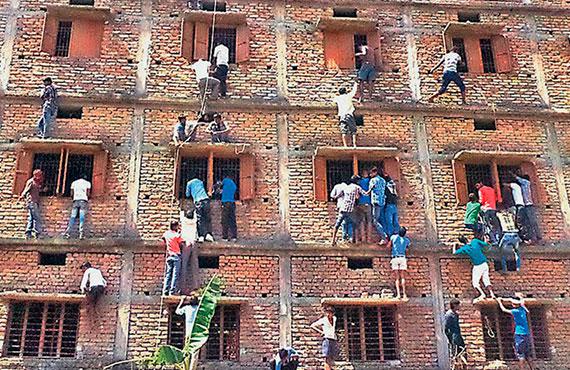
Justifying an act of cheating could appear to be a moral low point—but in Bihar’s case, it needs to be done. For a few days now, a bizarre photograph of people climbing an unplastered brick wall of a four-storey building has stoked curiosity, mockery, outrage and shame. After all, how could parents and relatives of students appearing for the state board’s class 10 examination so brazenly aid their wards in this illegal exercise? But what transpired at Vidya Niketan School in Mahnar, a town in Bihar’s Vaishali district, isn’t a solitary incident in the state.
- ‹ previous page
- 20 of 70
- next page ›


9765.png?itok=P1WXw18p)